Oro Valley Artificial Turf
Desert-Adapted Turf Installs in Oro Valley, AZ
Desert-adapted turf installs in Oro Valley use heat-resistant fibers and reflective infill built for extended 100°F+ summers. Free estimates.
- 15+ Years local experience
- 500+ Projects completed
- Licensed & Insured
Serving Oro Valley and nearby communities.
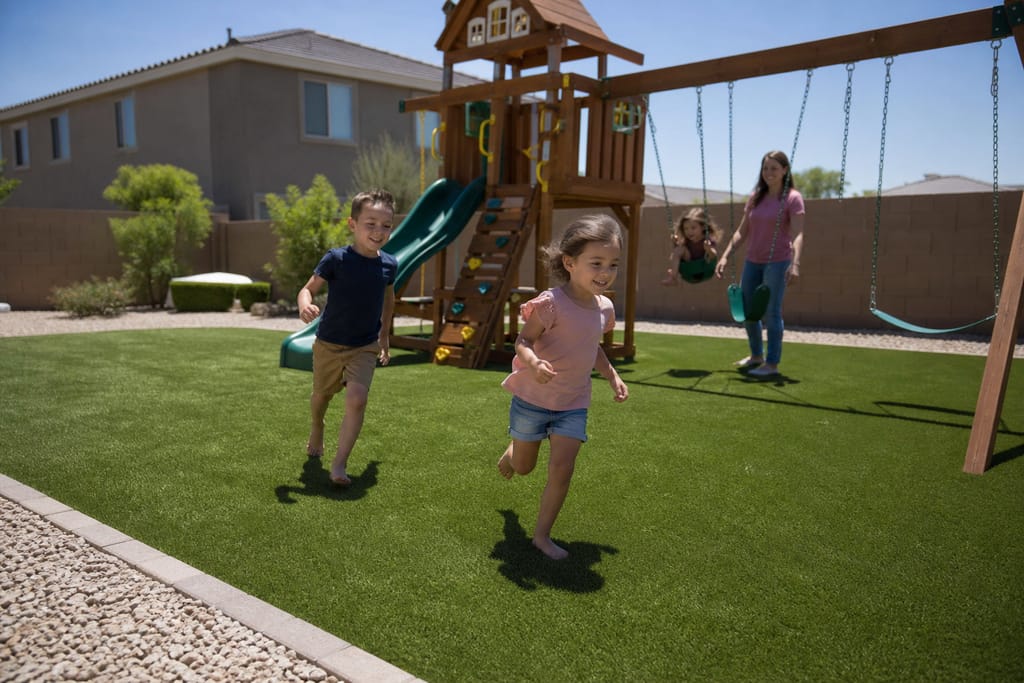
Not every turf product is rated for a Sonoran Desert summer. Generic synthetic grass sold for milder climates can soften, fade, or get hot enough to burn bare feet after a few seasons of Oro Valley sun. Desert-adapted turf installs start with fiber and infill chosen specifically for extended stretches above 100°F, not a one-size-fits-all product.
Oro Valley Artificial Turf picks fiber type, infill, and base material based on how much direct sun a given yard actually gets through the day, since a shaded side yard and a south-facing front lawn handle heat very differently. The goal is a lawn that still feels reasonable to walk across in July, not just one that looks green in a photo.
What's included
What's Included with Desert-Adapted Turf Installs
Typically included: heat-resistant turf fiber, reflective infill blend, UV-protected backing, expansion-gap seaming.
Optional: full cooling infill upgrade for play areas, shade-zone layout consultation for yards with mixed sun exposure.
Customer prep: let us know which parts of the yard get full sun all day versus partial shade so we can plan fiber and infill zone by zone.
Want a clearer scope?
Get a Free EstimateHow it works
How Our Desert-Adapted Turf Installs Process Works
 Step 1
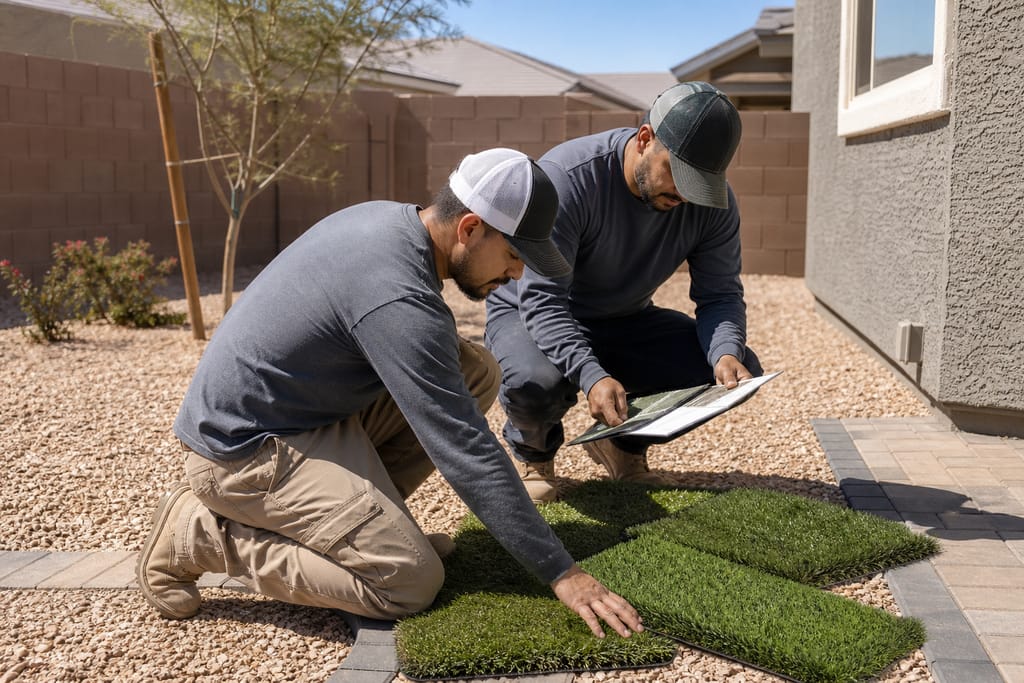
Heat tolerance planning
Turf products are selected based on resistance to high heat and intense sun exposure.
 Step 2
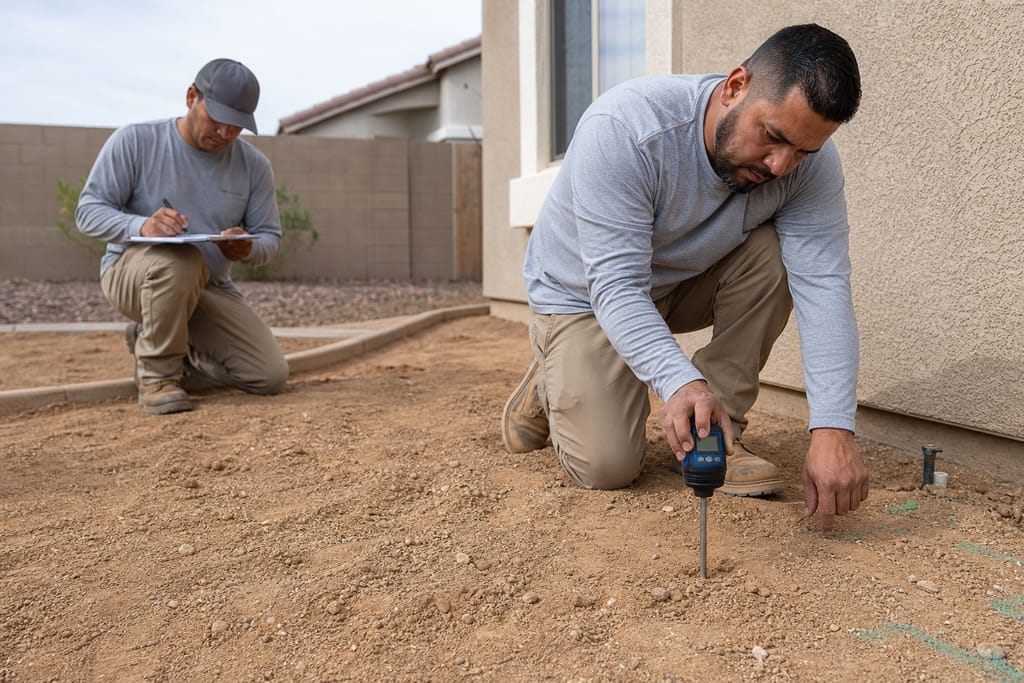
Soil moisture testing
Existing soil conditions are tested to plan appropriate drainage solutions.
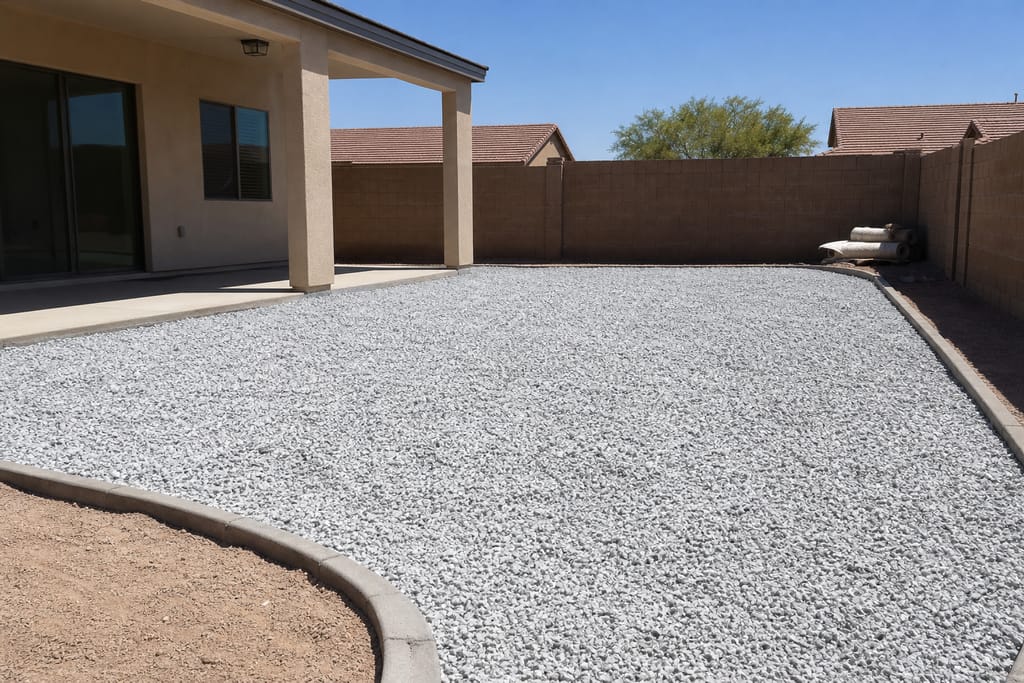 Step 3
Reflective base prep
Base materials are chosen to reduce heat retention beneath the turf surface.
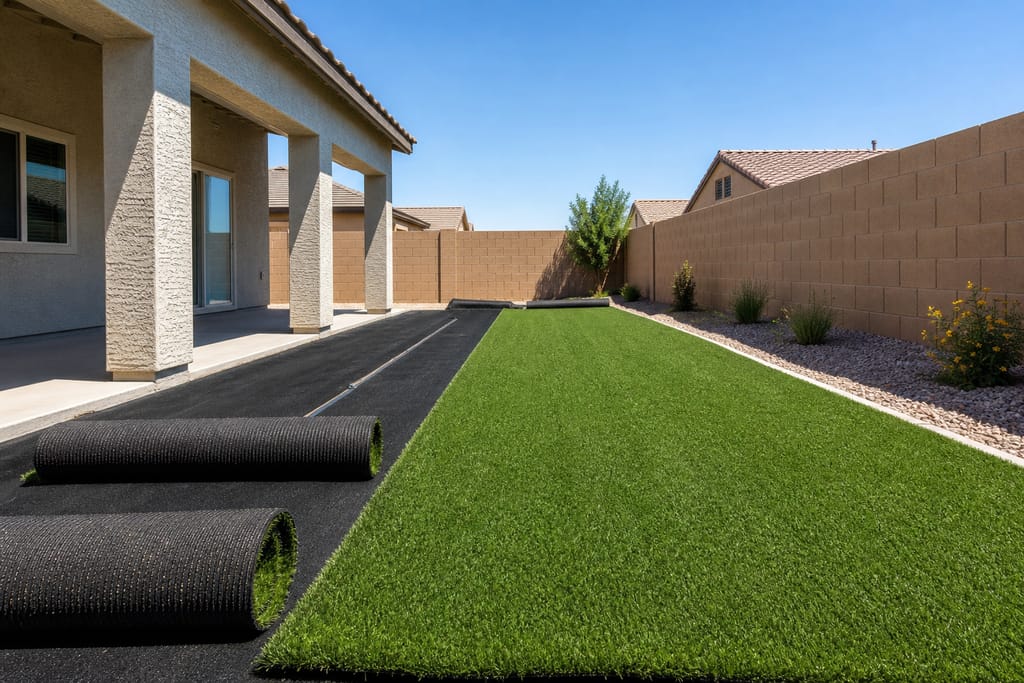 Step 4
Heat-resistant turf laying
Specialized desert turf fibers are installed to withstand extreme temperatures.
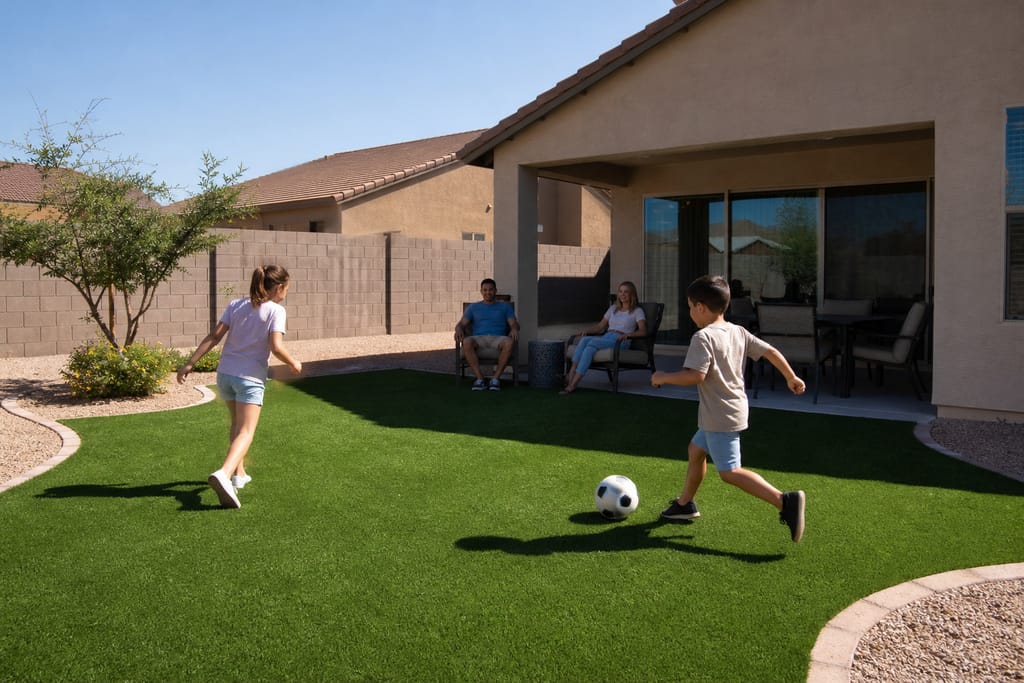 Step 5
Expansion gap allowance
Small gaps are built into seams to accommodate material expansion in heat.
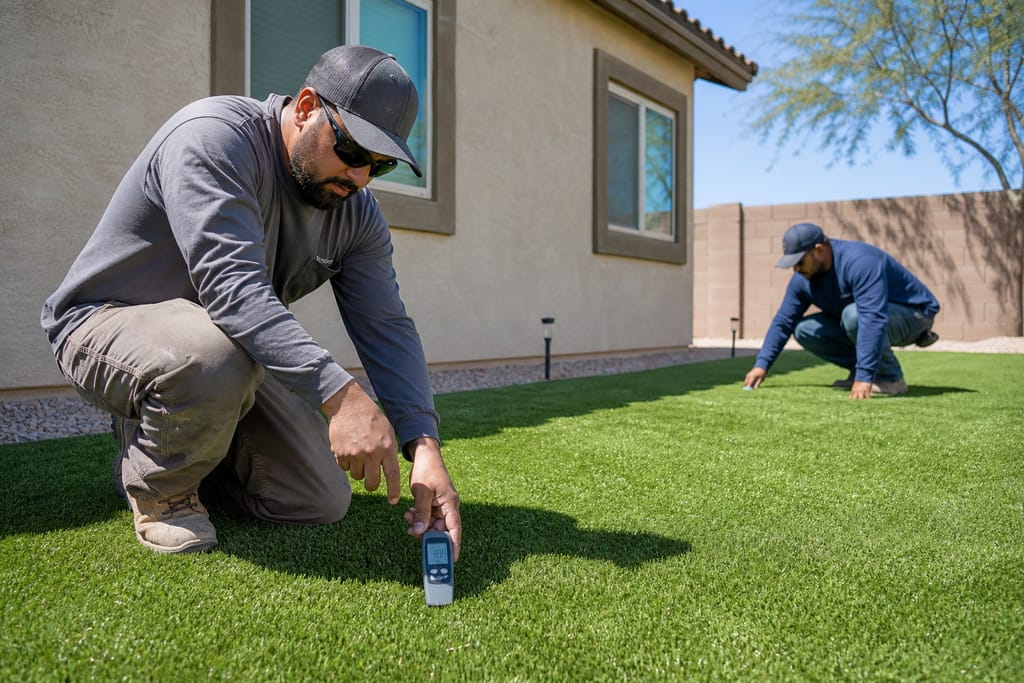 Step 6
Surface cooling check
The finished surface is tested for temperature performance under direct sun.
Materials
Materials and Methods for Desert-Adapted Turf Installs
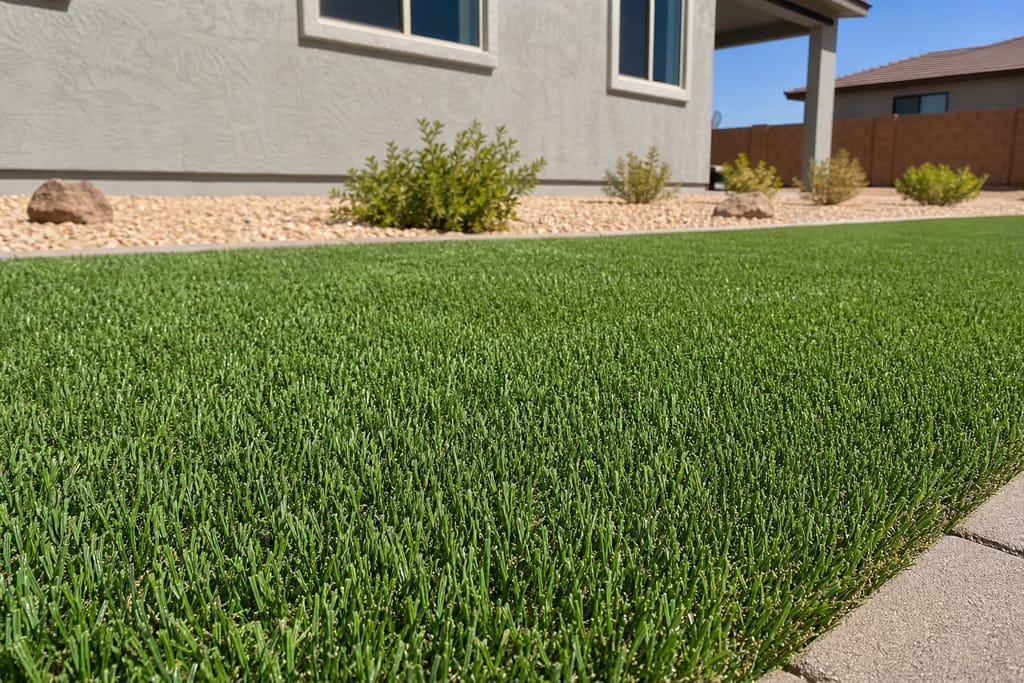
Heat-resistant turf fibers
Fibers hold their shape instead of softening through a full Oro Valley summer.
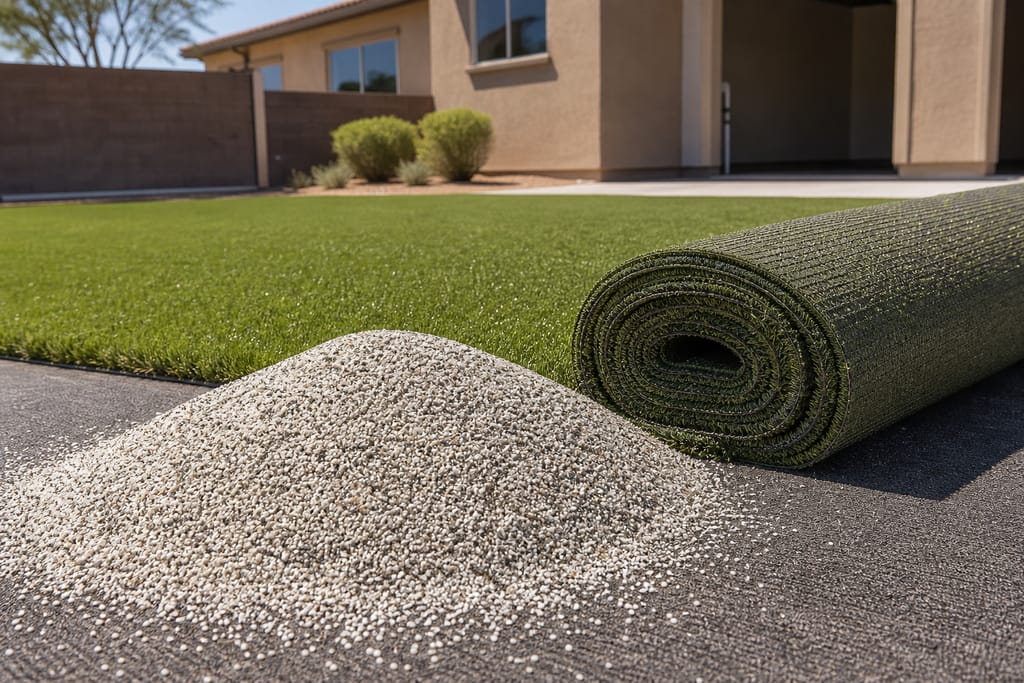
Reflective infill blend
Lowers surface temperature on south-facing yards that get sun from open to close.
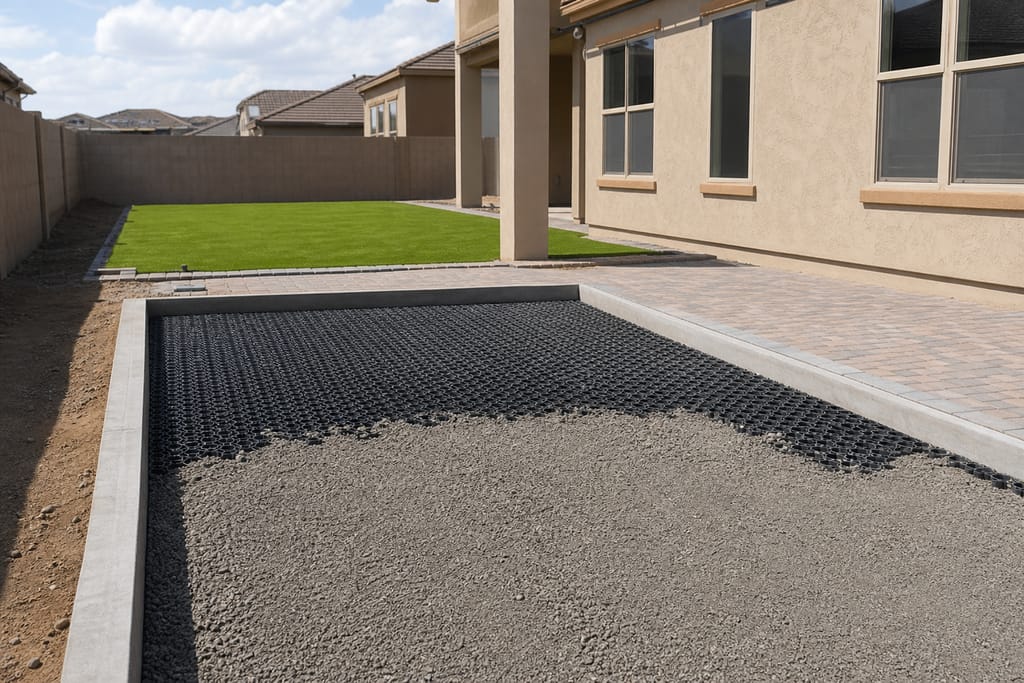
Drought-tolerant base layer
Stays stable even as rocky Pima County soil dries and shifts through the dry season.
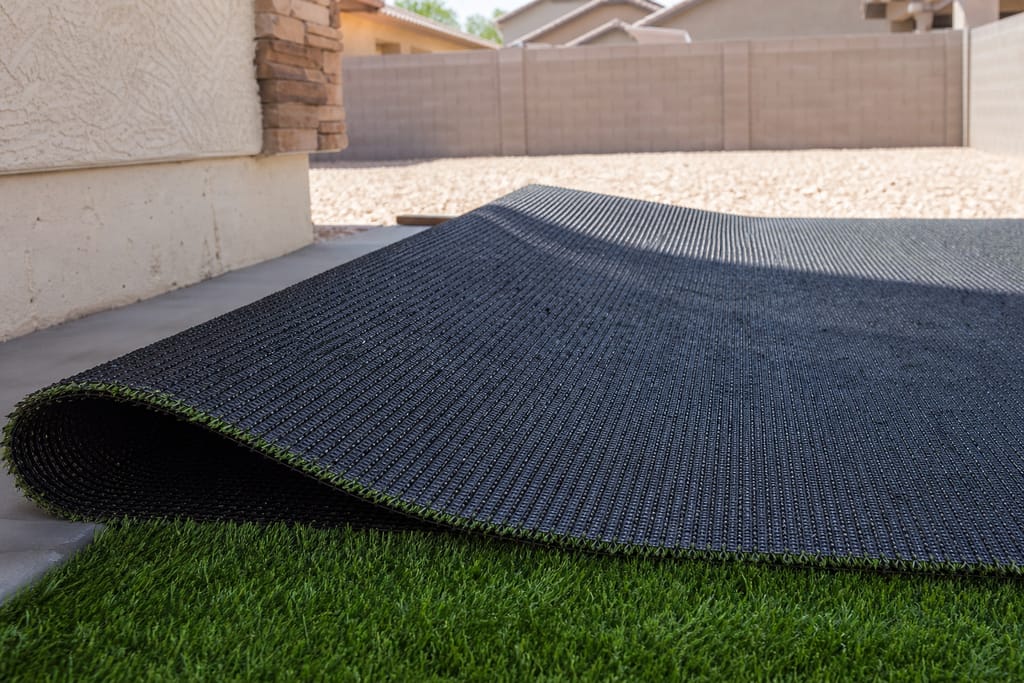
UV-protected backing
Treated backing resists cracking after repeated 110-degree days.
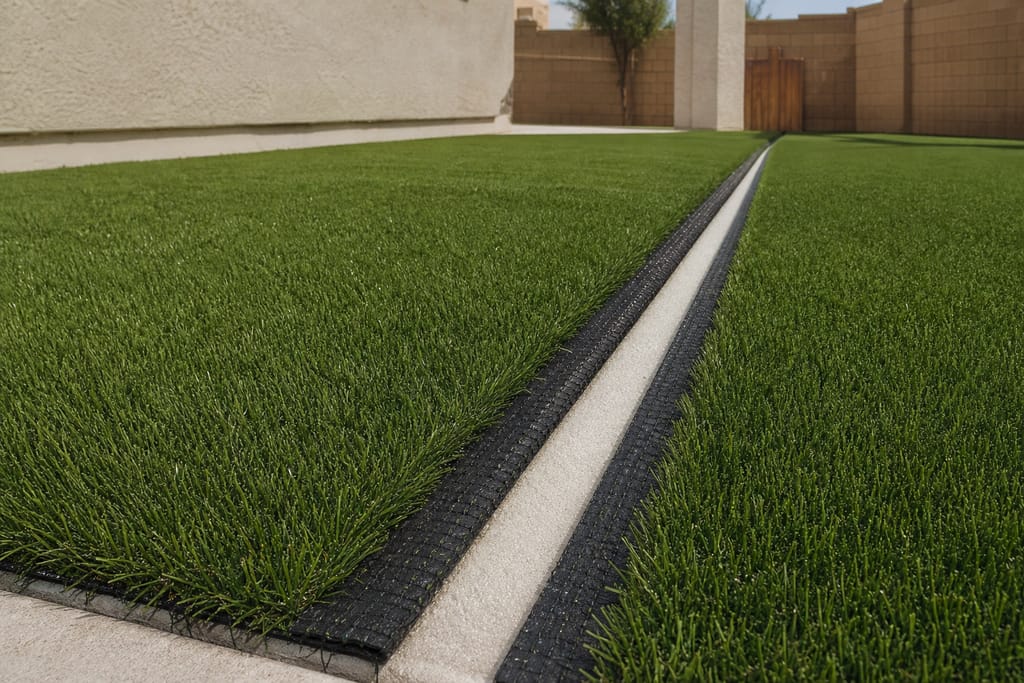
Thermal break seams
Seaming built with expansion room so heat cycles don't force seams apart over time.
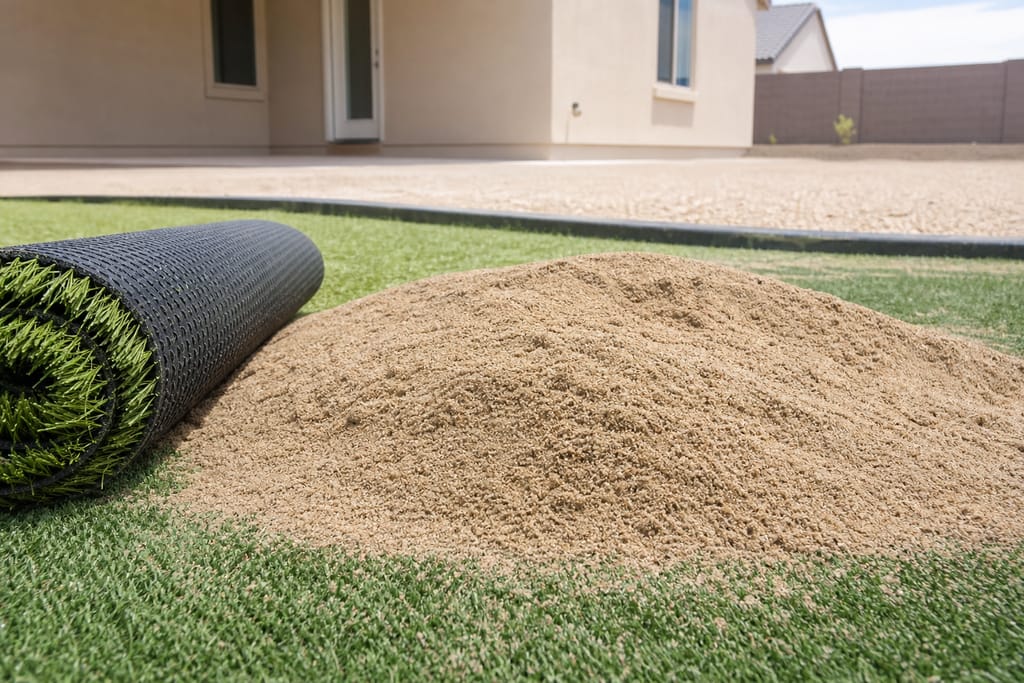
Sand-based filler
Provides stability while letting heat dissipate faster than denser infill options.
Questions on materials?
Get a Free EstimateBefore & after
Before and After Desert-Adapted Turf Installs
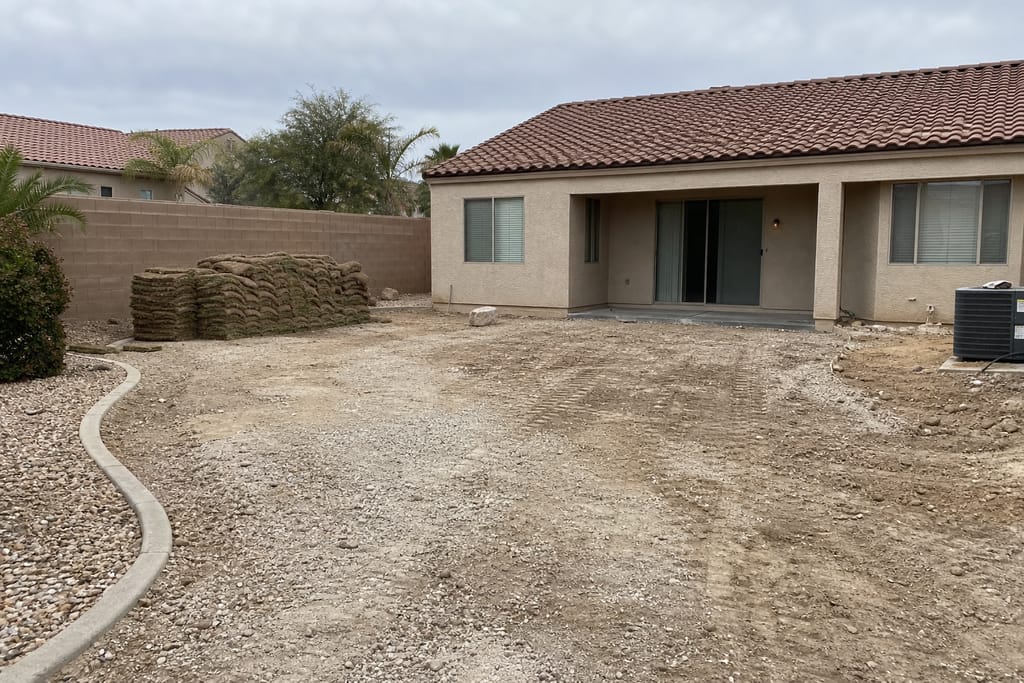
Before 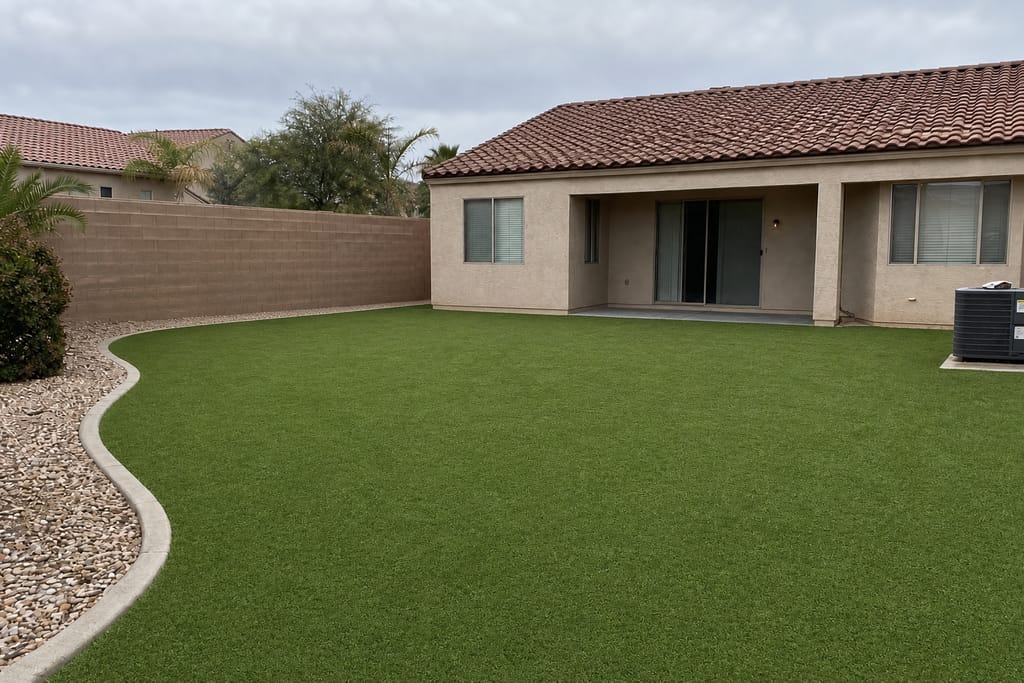
After
Timeline
How Long Does a Desert-Adapted Turf Install Take?
- 01
Stage 1
The heat-rated materials add a bit of planning time up front but don't change the on-site install schedule much.
- 02
Sun exposure assessment
same day.
- 03
Soil testing and base prep
1 day.
- 04
Turf install with thermal-break seaming
1–2 days.
Need a schedule that fits?
Get a Free EstimateFAQs
Desert-Adapted Turf Installs FAQs
What is the best artificial grass for hot climates?
Look for turf with heat-resistant fiber construction, a lighter color blend, and a cooling or reflective infill rather than standard silica sand. These combinations keep surface temperatures noticeably lower in direct sun.
Will desert-adapted turf still get hot in summer?
Any synthetic surface gets warmer than natural grass in direct sun, but heat-resistant fiber and reflective infill reduce the peak temperature compared to standard turf.
How much more does desert-adapted turf cost?
Expect roughly $1-$2 more per square foot over standard turf for the upgraded fiber and infill combination.
Does fiber color affect surface heat?
Lighter and multi-tone fiber blends generally run a few degrees cooler than darker, solid-green turf in full sun.
Is cooling infill worth it for a whole yard or just play areas?
Many homeowners reserve the cooling infill upgrade for areas with the most foot traffic, like near a patio or play space, and use standard infill elsewhere to manage cost.
How long do heat-resistant fibers last compared to standard turf?
Heat-resistant fiber is built to hold up longer under intense sun, typically performing well for 12-15 years versus 8-10 for standard-grade product in the same conditions.
Next step
Get a Desert-Adapted Turf Installs Estimate in Oro Valley
Call (928) 918-8824 for a free estimate built around how much sun your yard actually sees.
More services
Other Artificial Turf services
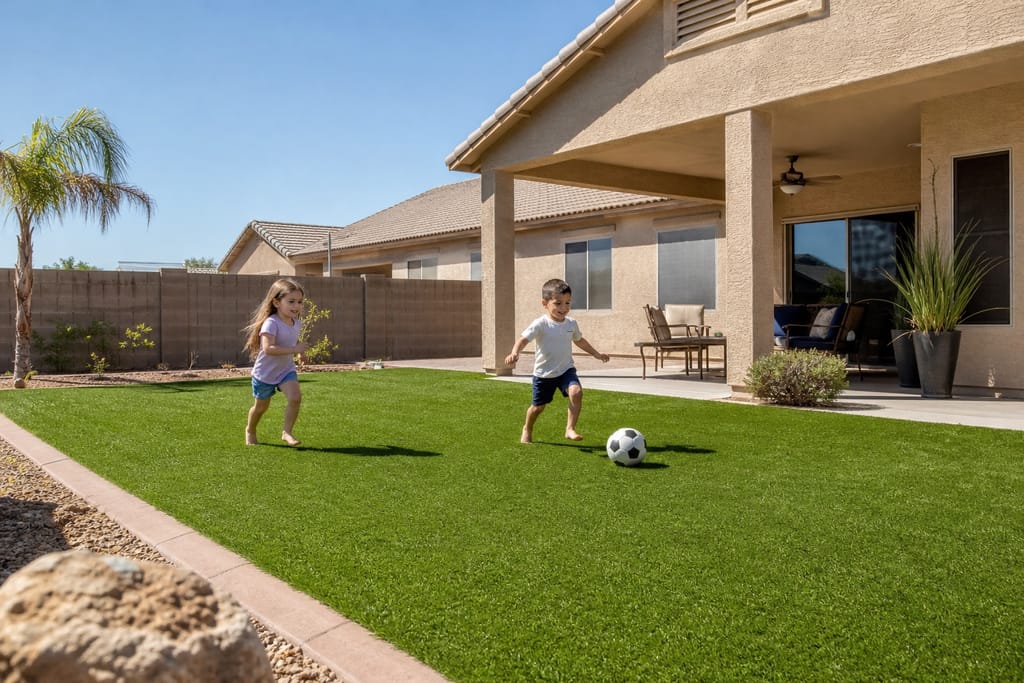
Artificial Turf Installation
Artificial turf installation in Oro Valley with heat-rated infill, caliche-ready base prep, and free written estimates.
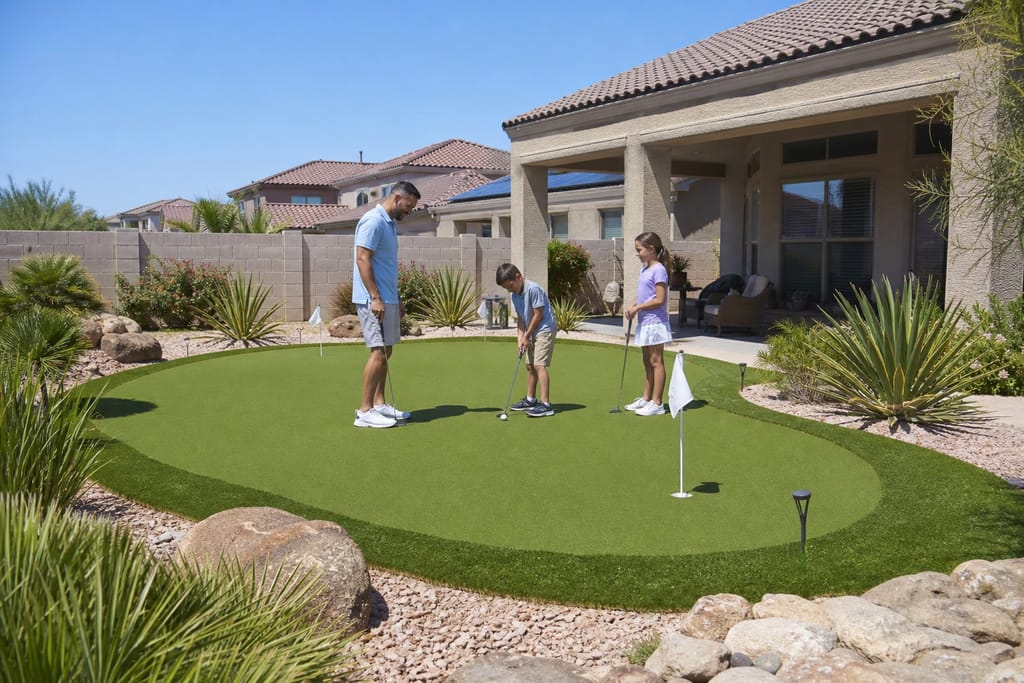
Putting Green Installation
Backyard putting green installation in Oro Valley with contoured bases, regulation cups, and realistic break patterns. Free estimates.
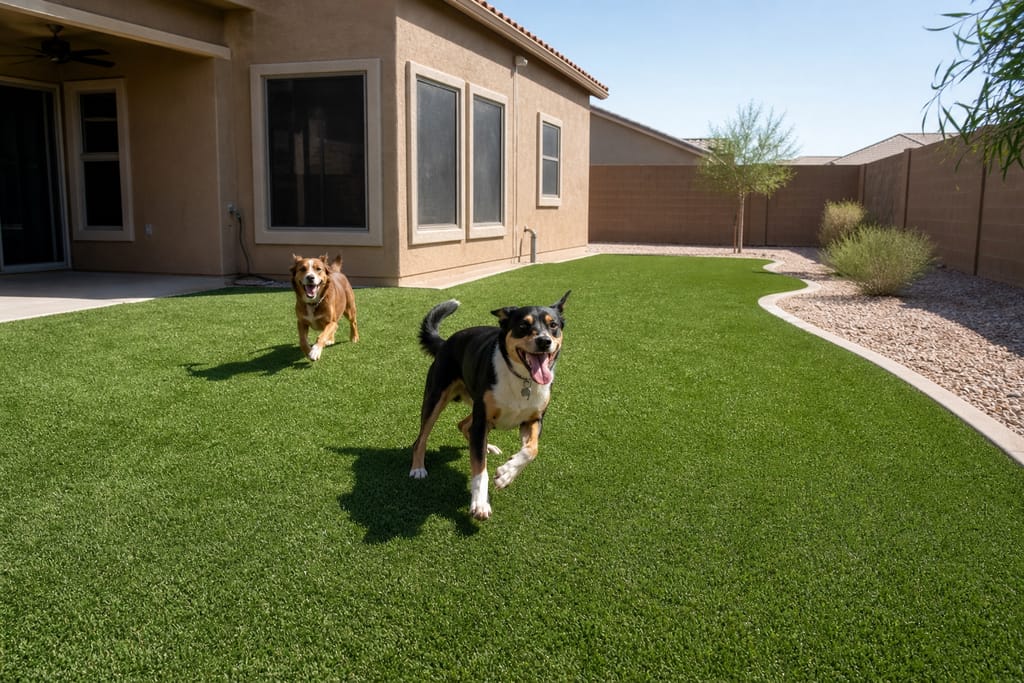
Pet Turf Installation
Pet-friendly turf installation in Oro Valley with drainage backing and odor-control infill built for dogs in desert heat. Free estimates.
Ask about Desert-Adapted Turf Installs
Tell us about the project and how to reach you.